Ben Cooper was always looking for ways to sell more costumes and stay ahead of the competition, whether through innovation or imitation. Often, they were just trying to capitalize on whatever trend or craze was popular at the time, many of which were short-lived, or revisiting old gimmicks under new names. Here are some of the more notable examples, excluding other product lines like pajamas and playsuits, as well as safety-oriented innovations like Big Eye masks, Color Brite, and Safety First costumes.
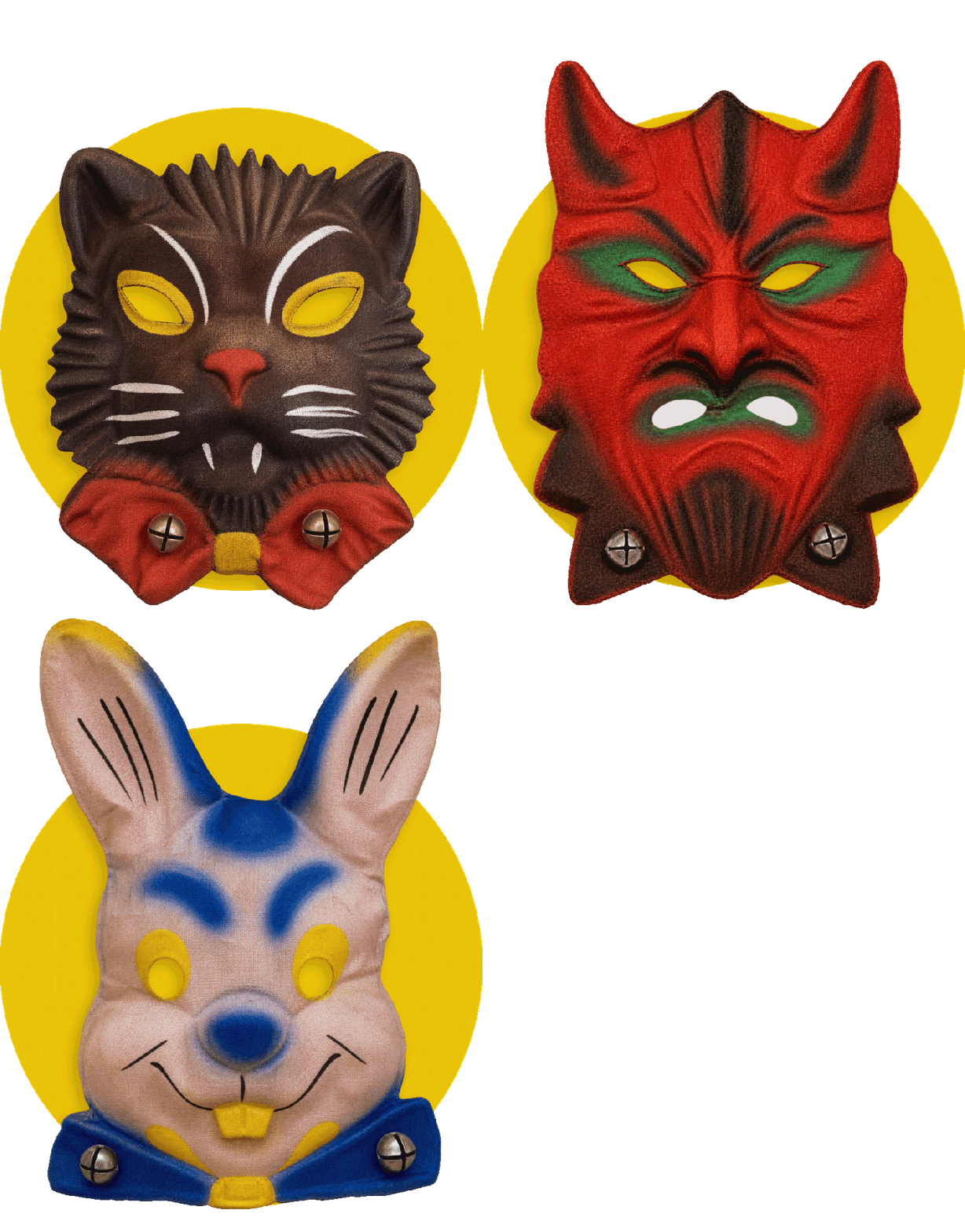
Jingle Bell Masks (1954)
Buckram fabric masks with small metal bells attached to the collar. I’m not sure if it was intended as more of a safety feature or if it was just a selling point. The company continued to sell plastic versions into the 70s.
Disney Voice Masks (1954)
According to a March 1954 Playthings Magazine article (link) Mickey Mouse, Minnie Mouse, and Donald Duck costumes were given “voices” – in actuality it was just a fabric pouch with a noisemaker inside (shown here) sewn to the waist of the costume. Toys with squeaker “voices” was a novel idea at the time, going back to at least the start of the decade. Revived in the 70s as Beeper Squeeker costumes.
Lite-Up Masks (1955)
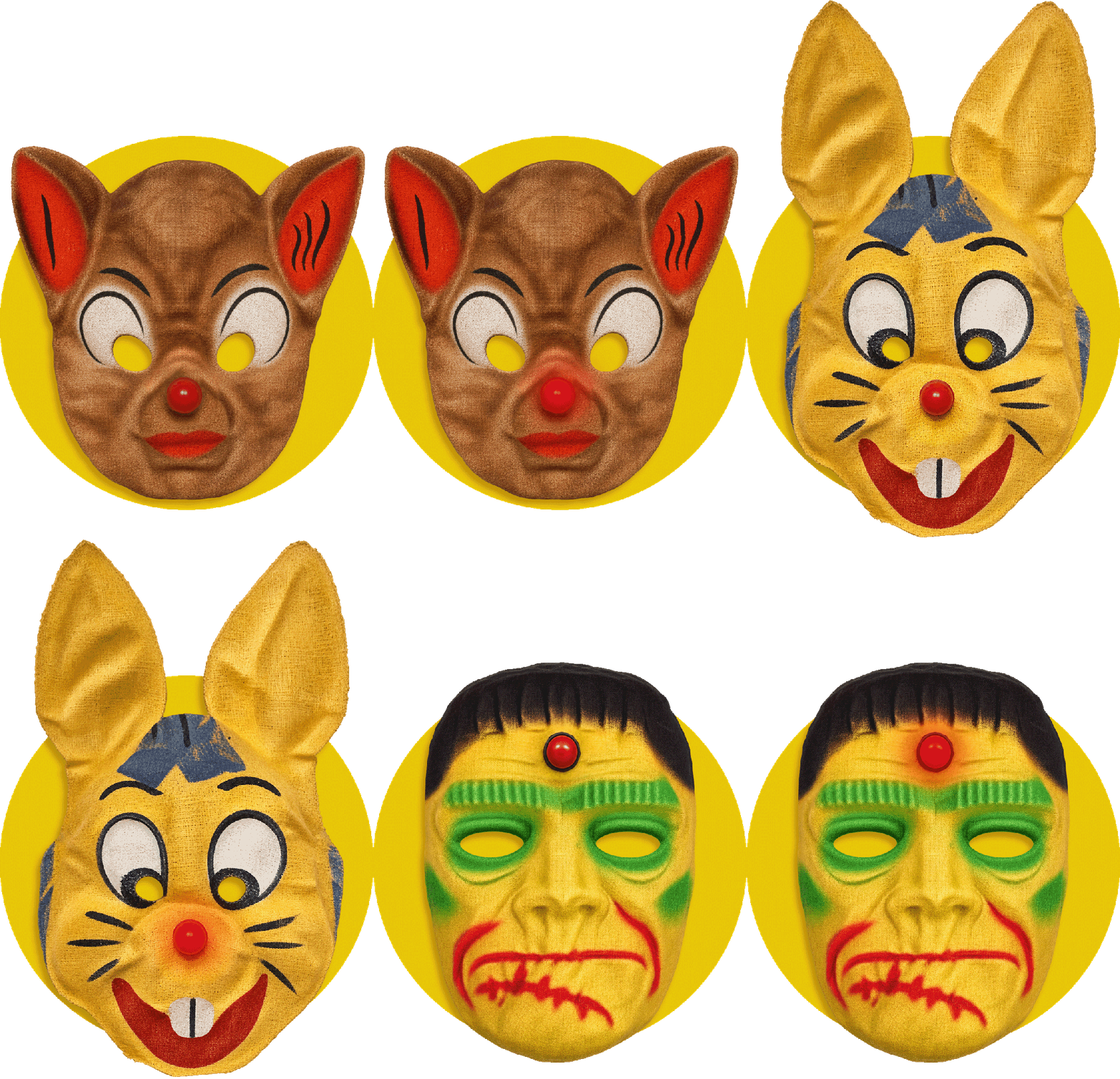
Buckram fabric masks with small light bulbs that were controlled with a wired remote which was just a flashlight battery in a cardboard housing and a copper leaf switch. The costumes came in branded boxes (link) with instructions (link). They soon transitioned to plastic masks as the industry changed but the line was discontinued by the end of the decade. Revived in the late 60s as Flick & Trick masks.
Long-Neck Masks (1955)
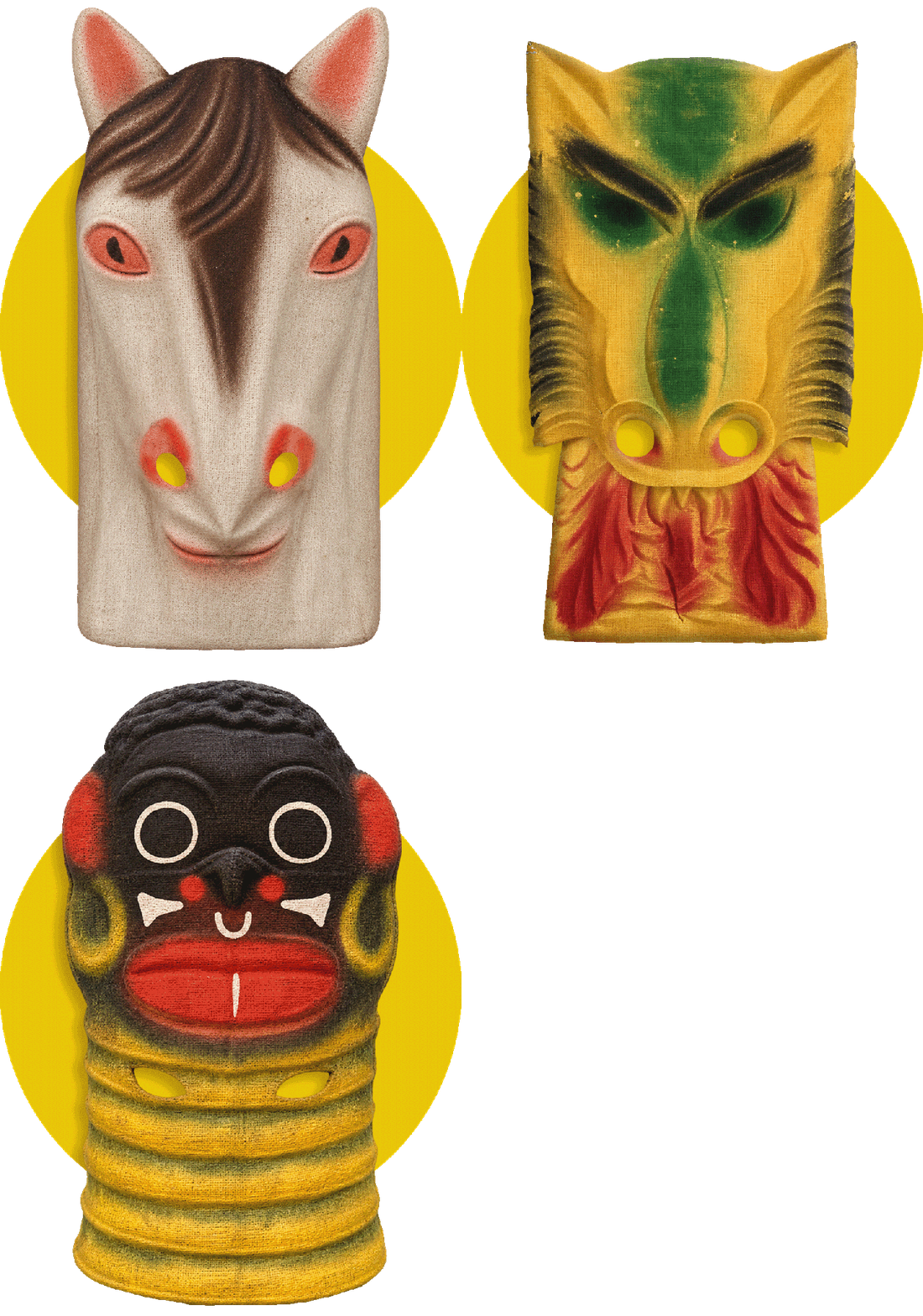
Patented in 1955 (link), these elongated buckram fabric masks extended above the wearer’s head with a false set of eyes to make the person appear taller. There were cutouts in the neck or nostrils of the mask to see through. They were among the last of the fabric masks made by the company. The costumes came in specially designed long boxes with illustrations of the masks on the front (link).
Glitter Glo Costumes (1959)
Trademarked in 1960 (link), the fabric costumes were adorned with glitter which was applied to the design while the ink was wet. Marketed as both a fashion enhancement and a safety feature, it was replaced by the Magic Glo line in 1962. Two different dedicated boxes were made for the costumes (link) (link).
Super Mask / Mask Parade Costumes (1960)
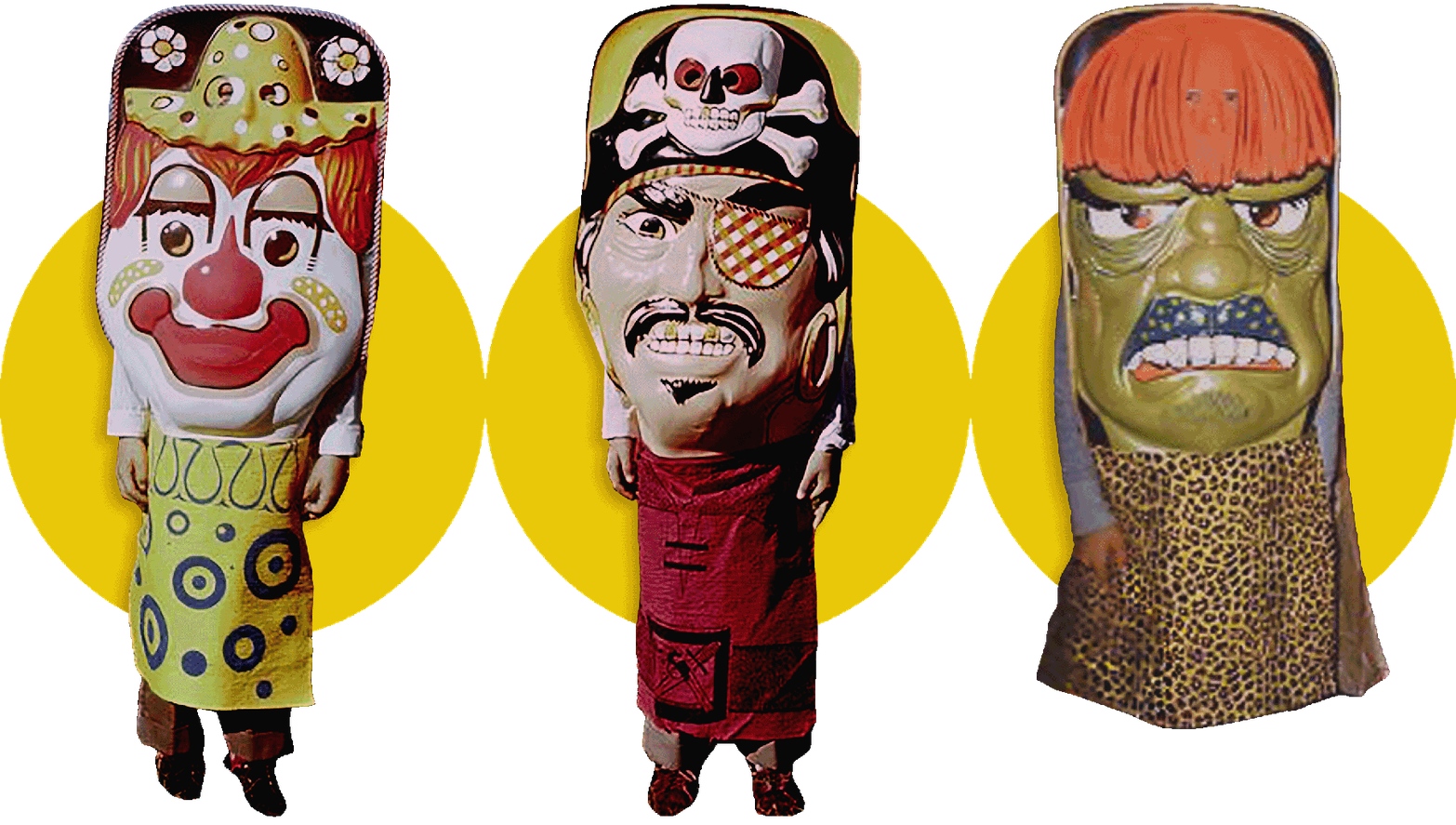
One peice giant mask costumes that covered the entire head and torso with cutouts above the forehead to see through meant to compete with Collegeville’s similar Mask-A-Rama line. Available in fourteen styles including Clown, Pirate, and Caveman (all pictured here). It was something of a minor fad in 1960, but had all but disappeared by 1962.
Winky Masks (1961)
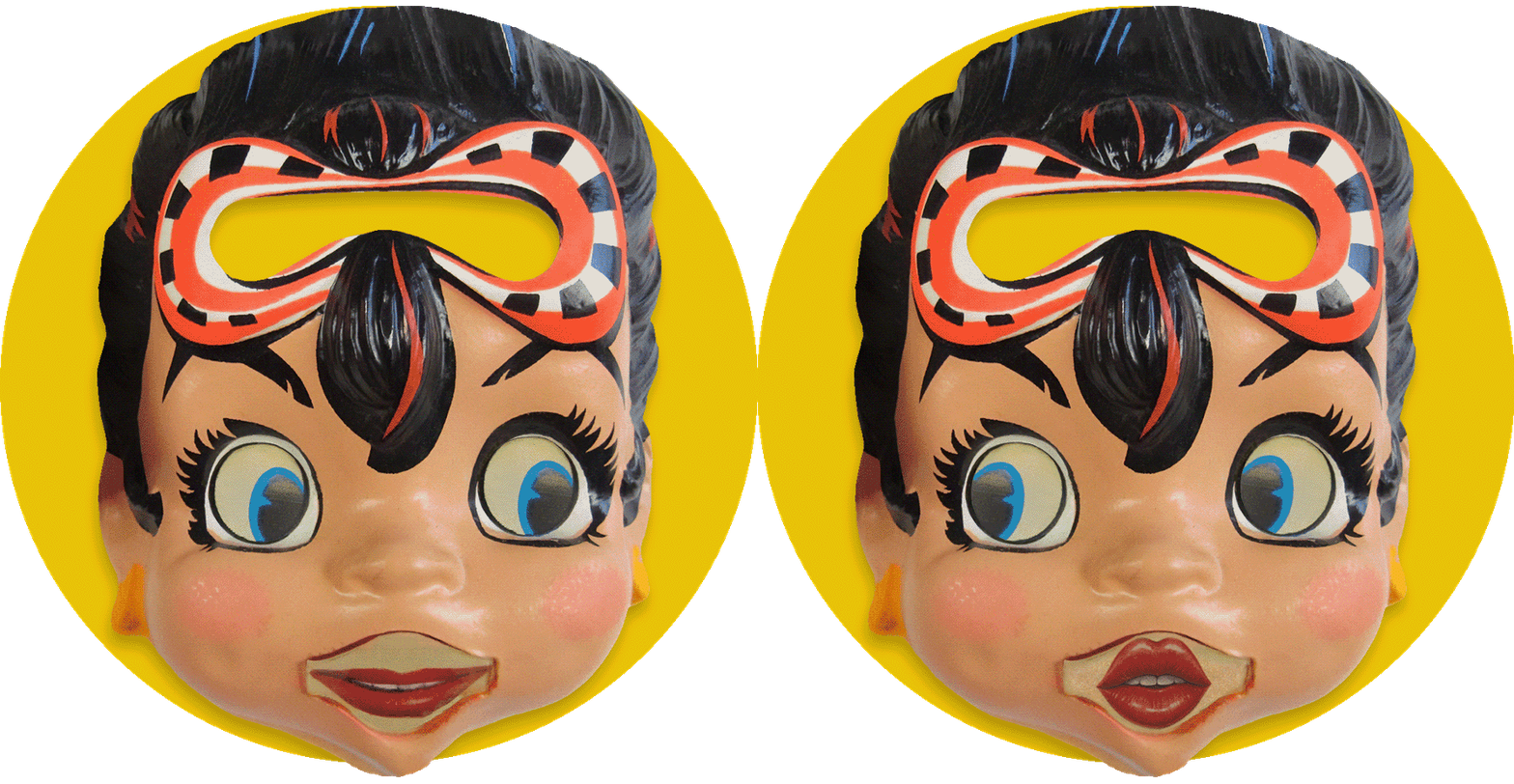
Mentioned in the 1961 catalog (link) these masks had animated false eyes and sometimes lips by way of lenticular overlays with disguised cutouts for the wearer’s eyes above or below. Four masks were produced, Winky Leopard (sometimes labelled Winky Tiger), Winky Devil, Winky Clown, and Winky Girl (shown here).
Magic Glo Costumes (1962)
Trademarked in 1962 (link), it replaced the company’s popular Glitter Glo line by adding glow in the dark masks to the glitter adorned costumes. The costumes came in a dedicated box (link), and the brand was promoted heavily until being discontinued around 1966.
Moving Mouth Masks (1963)
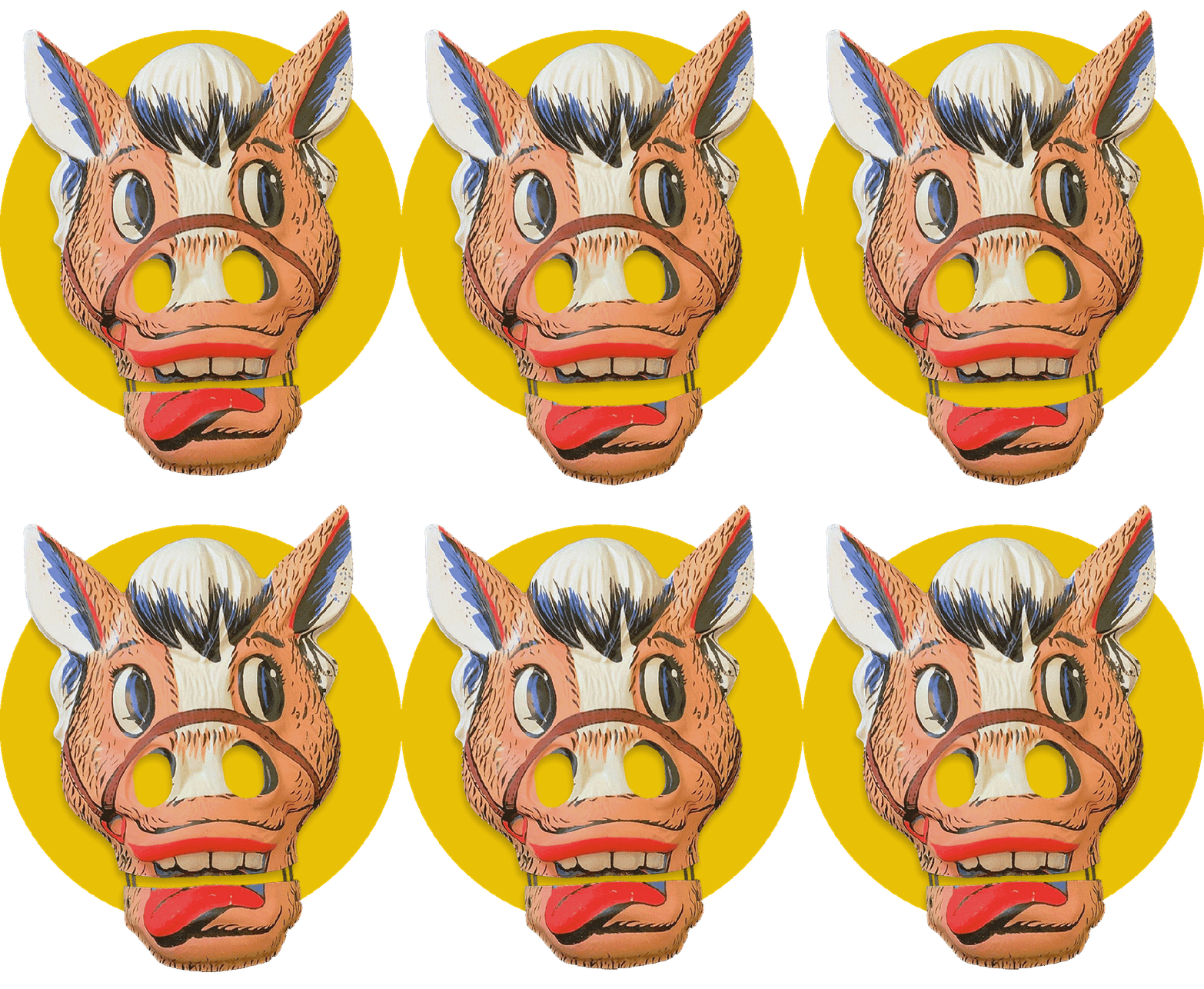
Patented in 1962 (link), these two piece masks had jaws attached by metal eyelets. This allowed it to open and close when the wearer moved their mouth. Initially advertised as “Yak Yak” costumes in some newspapers, Ben Cooper continued to sell versions of the masks until the late 1970s.
Chattermouth Masks (1966)
A rebranding of Moving Mouth Masks that coincided with the switch to elastic bands in place of metal eyelets, most likely to lower production costs. There was a dedicated box for the costumes (link).
Flick & Trick Masks (1967)
Lite-up Masks rebranded for the 1960s. The technology was the same but the masks were updated with some having translucent faces. There was a dedicated box for the costumes (link). The remote-controlled light bulb system or “Fun Lite” was also available as an aftermarket add-on for other masks.
Hoot N’ Toot Masks (1968)
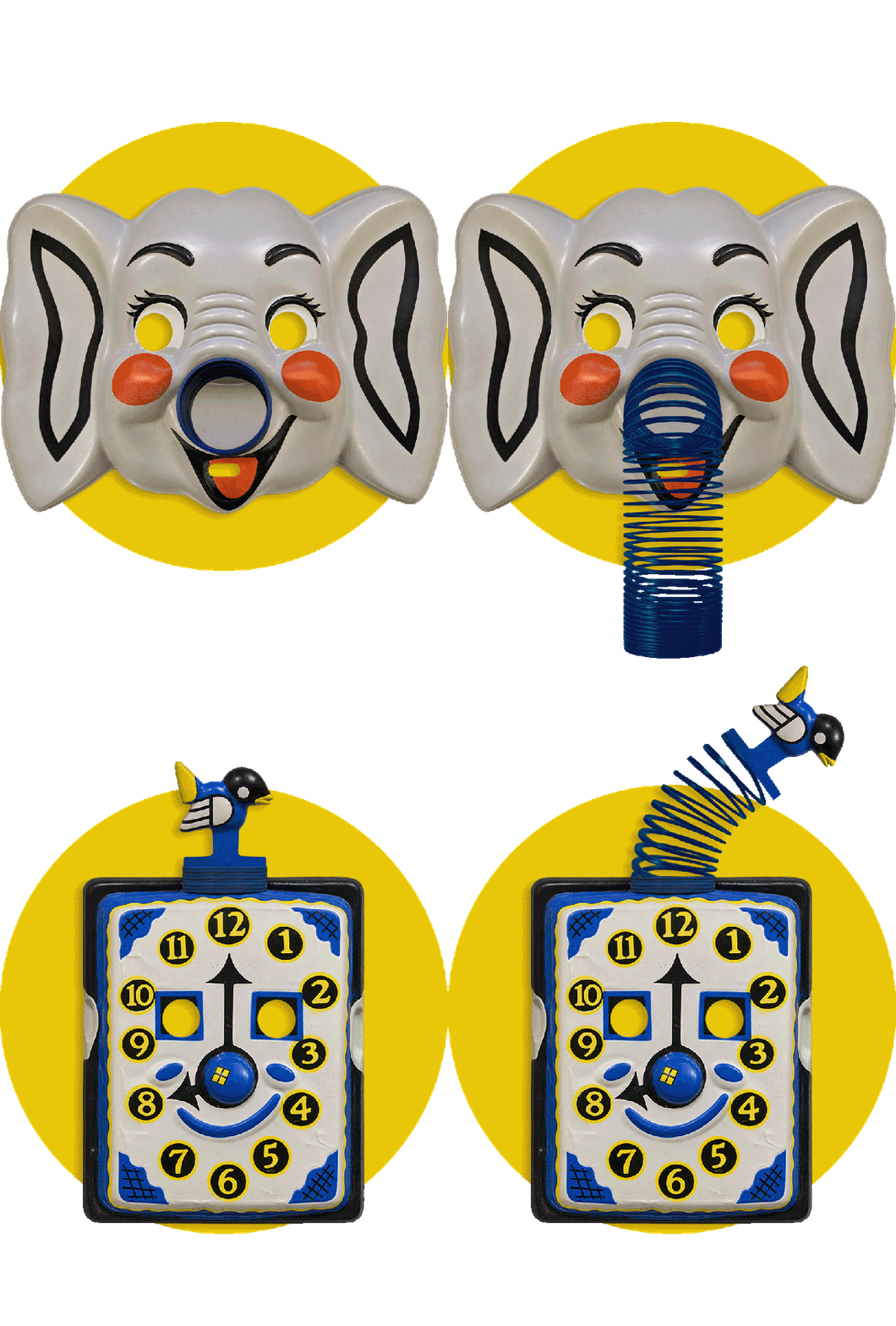
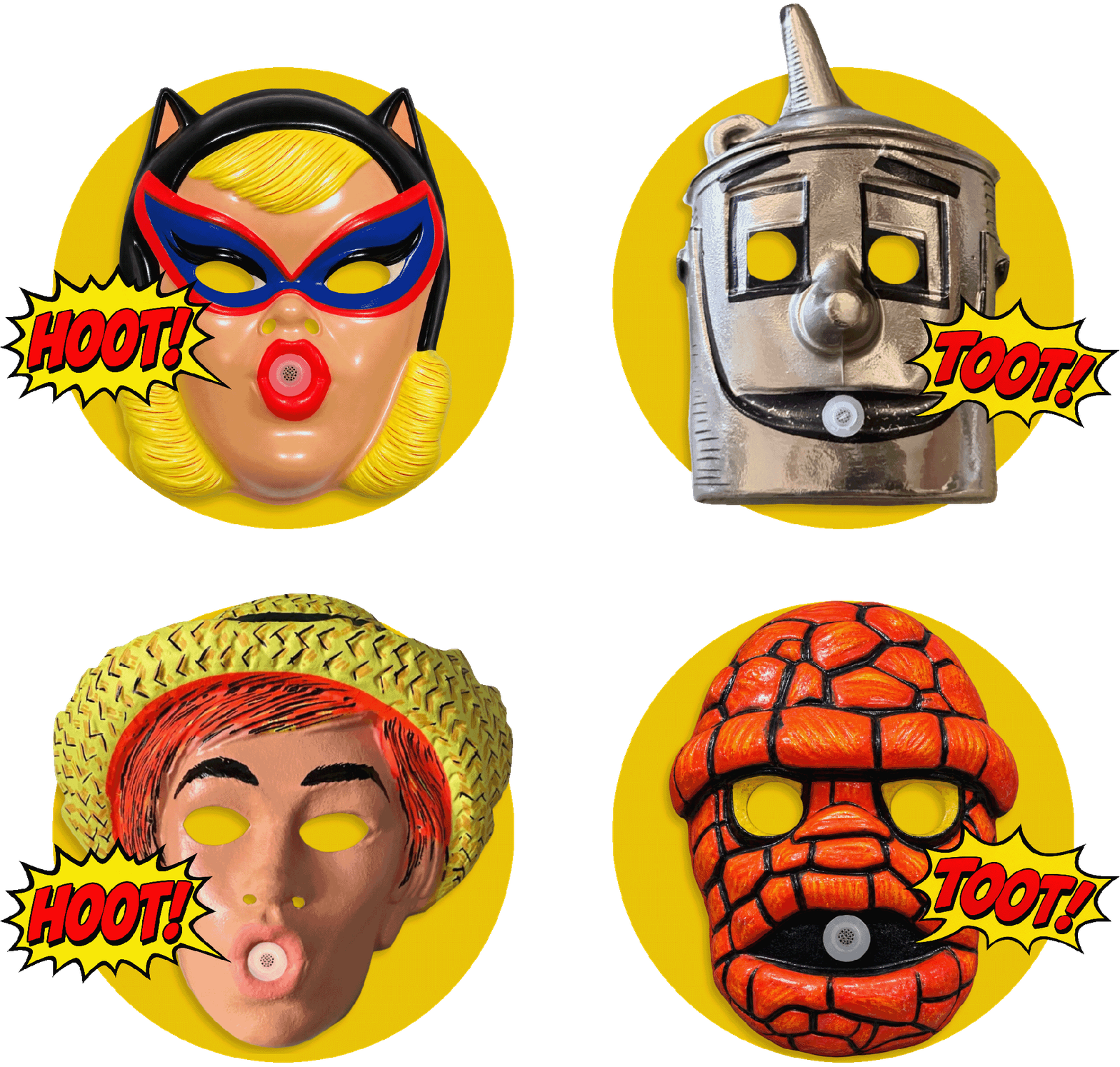
Masks with whistles in the mouth that could be “tooted” while wearing them. They had a dedicated box (link) with artwork depicting five masks; Pretty Kitty, Tin Man (both shown here), Devil, Clown, and Tiger – Not shown on the box were two licensed masks – Huck Finn and The Thing (also shown here).
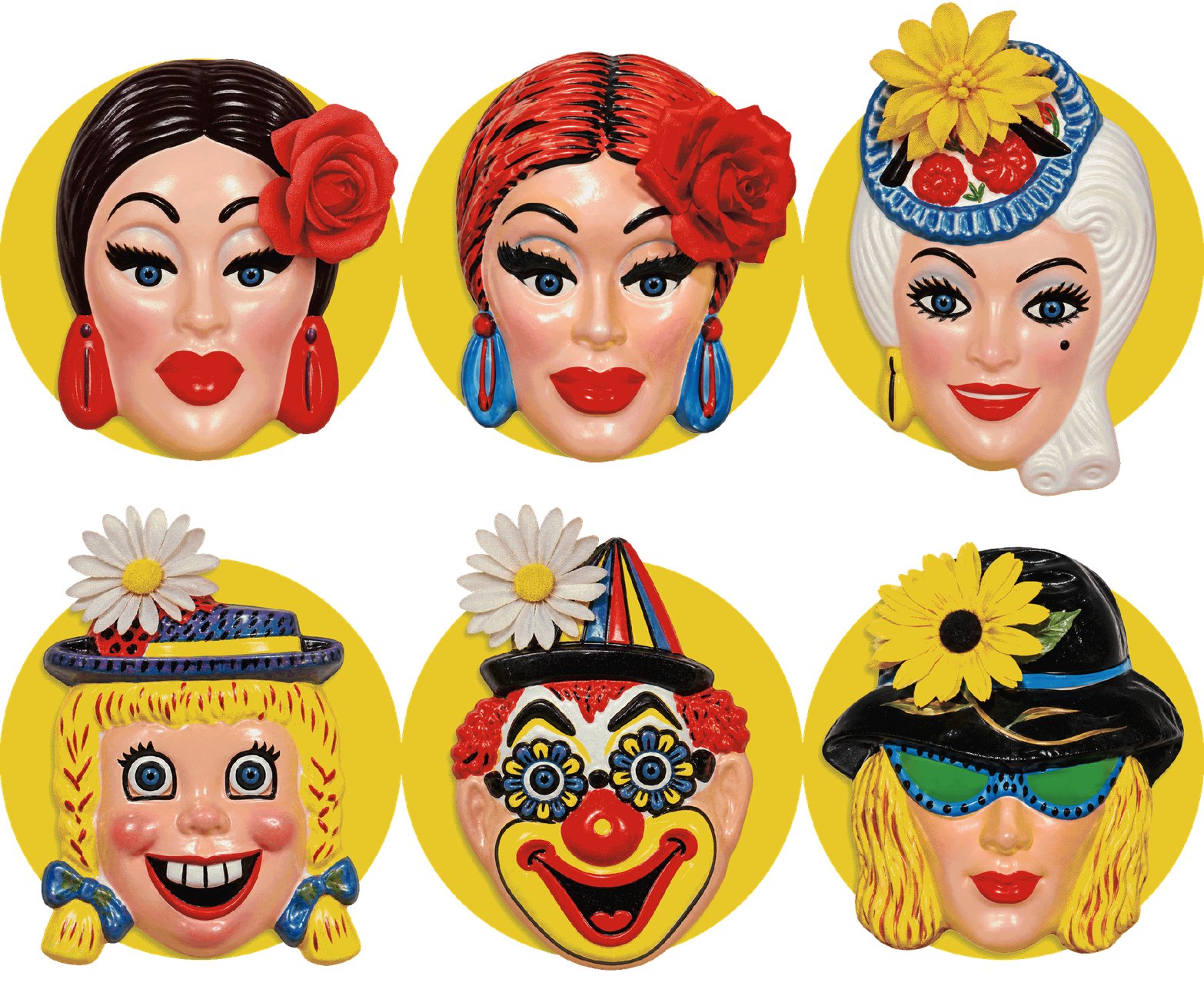
Flowery Masks (1970)
Short-lived line of masks with “realistic… exotic flower decorations” on their head.
Six masks were advertised in the 1970 catalog: Native Girl, Movie Star, Dancer, Country Girl, Clown, and Lady Bandit (all shown here).
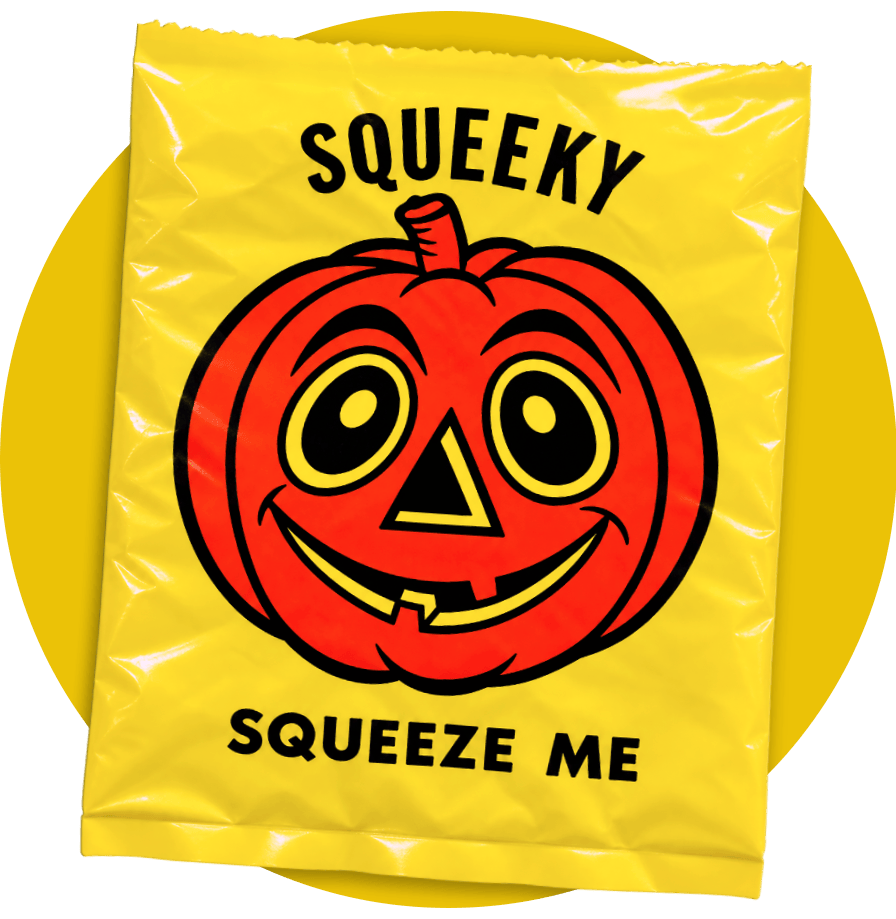
Beeper Squeeker Costumes (1972)
Small-size “Tiny Tot” costumes that had noisemakers in plastic pouches that hung from the shirt/smock/top. Similar to the Disney Voice costumes the company made nearly two decades before. The costumes came in a dedicated box (link).
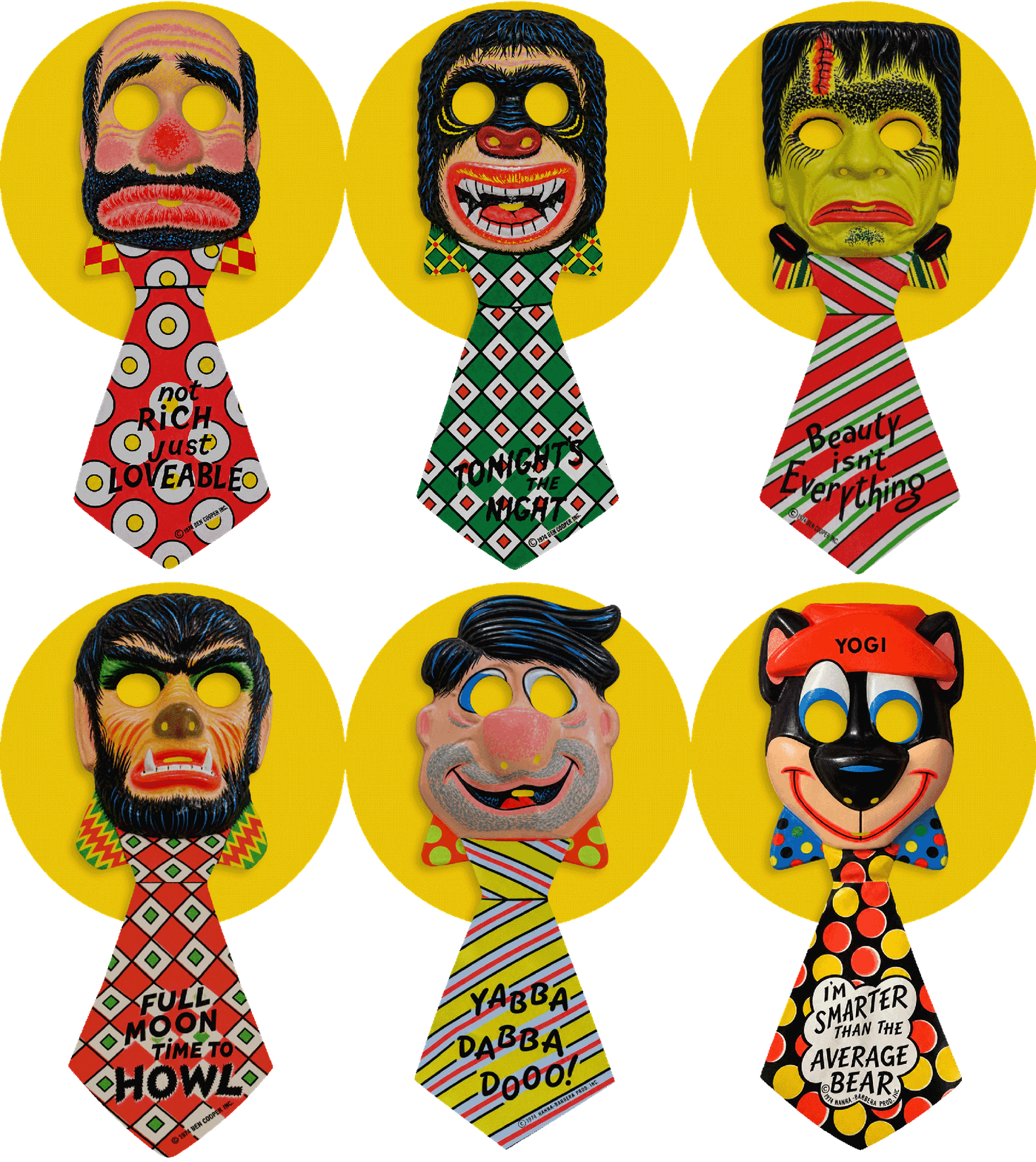
Silly Slogan Tie Masks (1974)
Masks that had oversized fabric neckties with character catch phrases on them. Six masks were made; Hobo, Gorilla, Frankenstein, Wolfman, Fred Flintstone, and Yogi Bear (all shown here). Discontinued in 1976.
Chattermouth Masks v2 (1977)
The company brought back the “talking” masks updated for the 1970s with a new patented design (link), new styles, and a new box for the line (link).
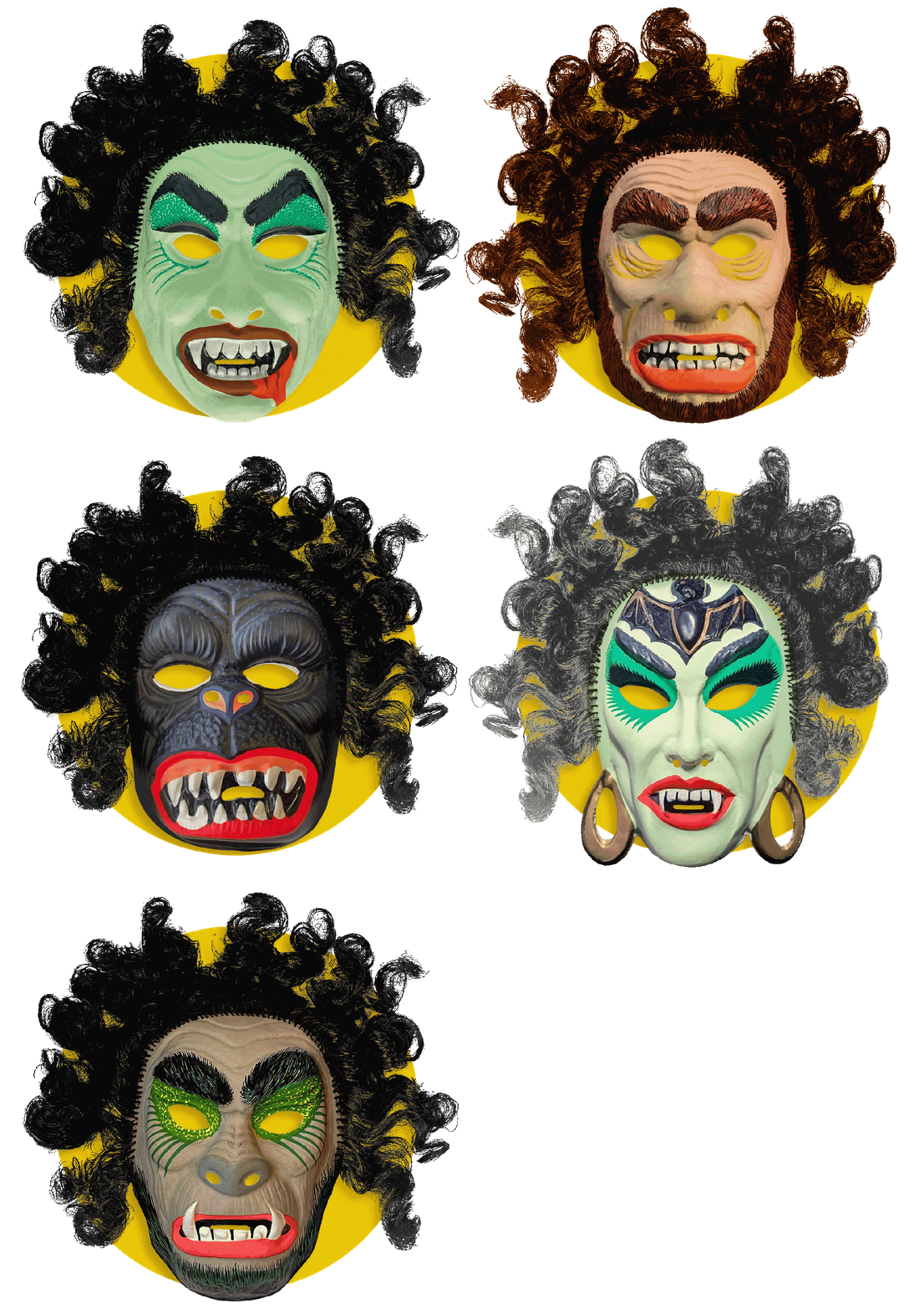
Hairy & Scary Masks (1980)
Although the company had used the term “hairy scary” for their rooted hair masks off and on since the mid 60s, it wasn’t until 1980 that they came with costumes and had a dedicated box (link). Styles included Bigfoot, Congo the Gorilla, Vampire, Werewolf, and Dracula (all pictured here). They continued to expand the line until 1985 when they reverted back to selling just the masks without costumes.
Inflatable Spooky Bird Costumes (1981)
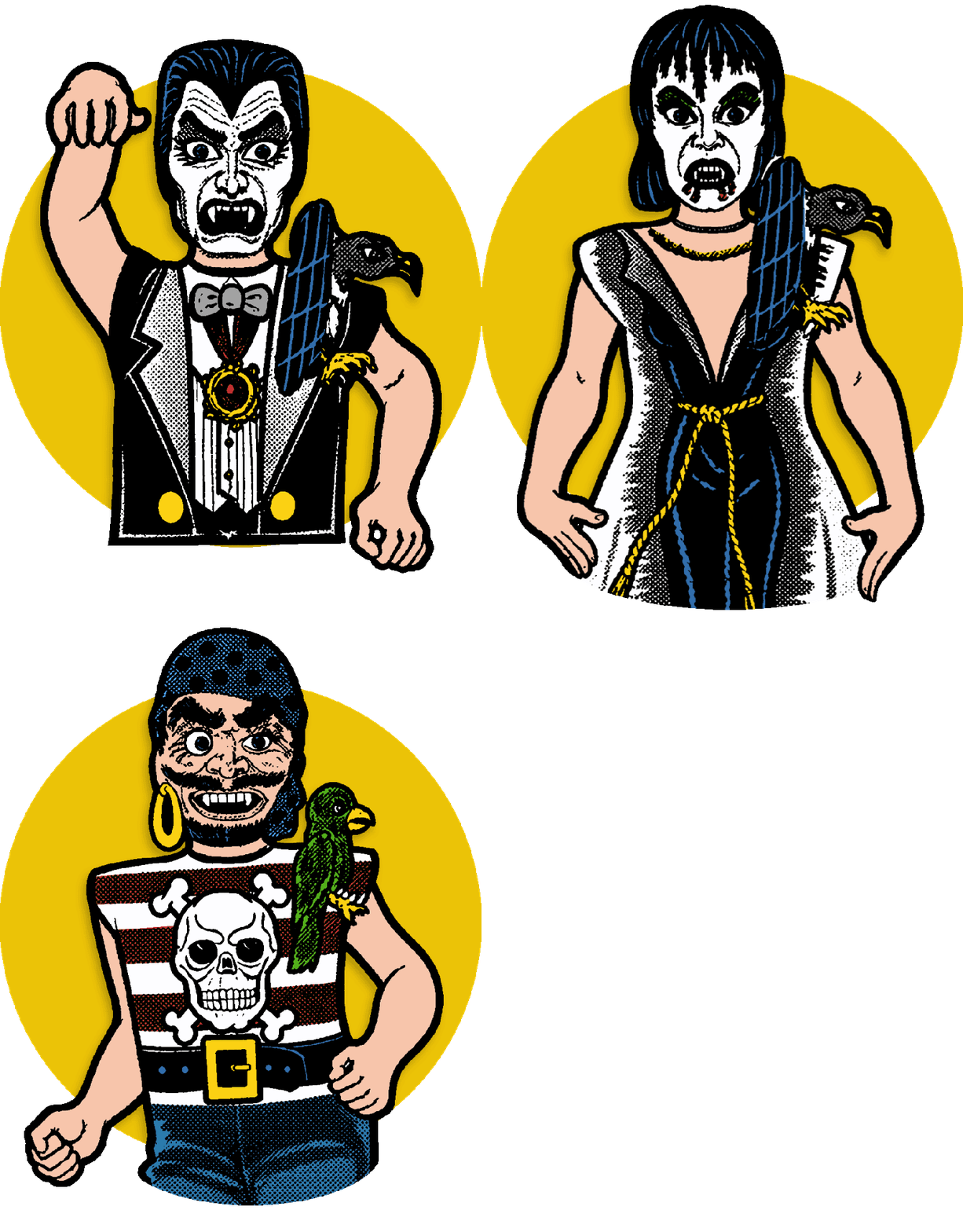
Perhaps the oddest of all are these costumes with inflatable birds attached to the shoulder. Advertised in the 1981 catalog in three styles; Dracula, Vampire, and Pirate (all shown here). I haven’t found anything to sugget they were actually produced.